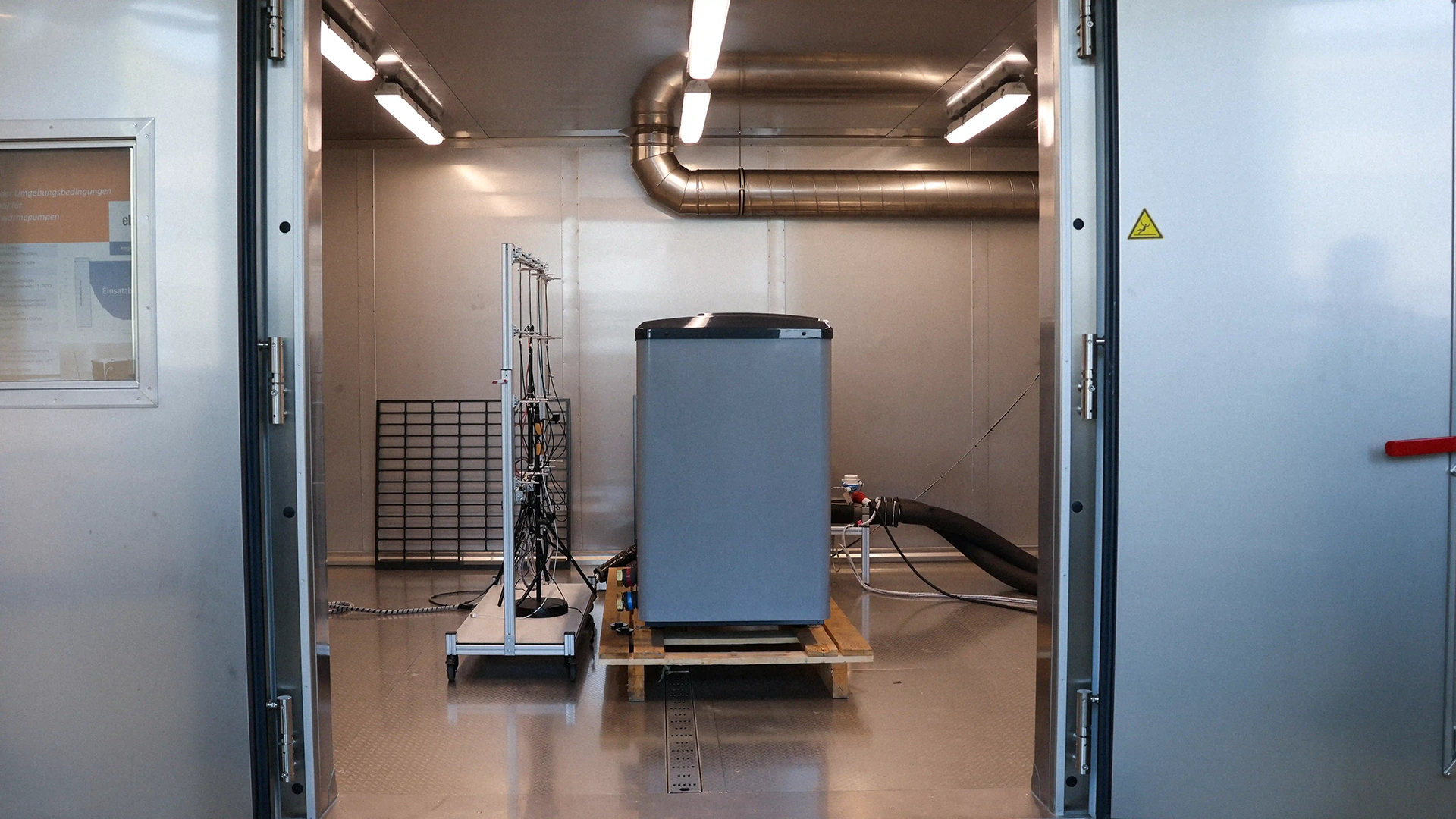
Whether on a freezing winter’s morning or a hot summer’s day, heat pumps must operate reliably under a wide range of outdoor conditions. They must be able to heat and—increasingly—cool as well. Fans play a key role in this. They circulate air through the heat exchanger and influence how efficiently the entire system operates—not only the individual components, but also how these interact within the system. So, how well do the fan, inverter electronics, evaporator, and refrigeration cycle work together? And what happens when ice forms in cold, humid conditions?
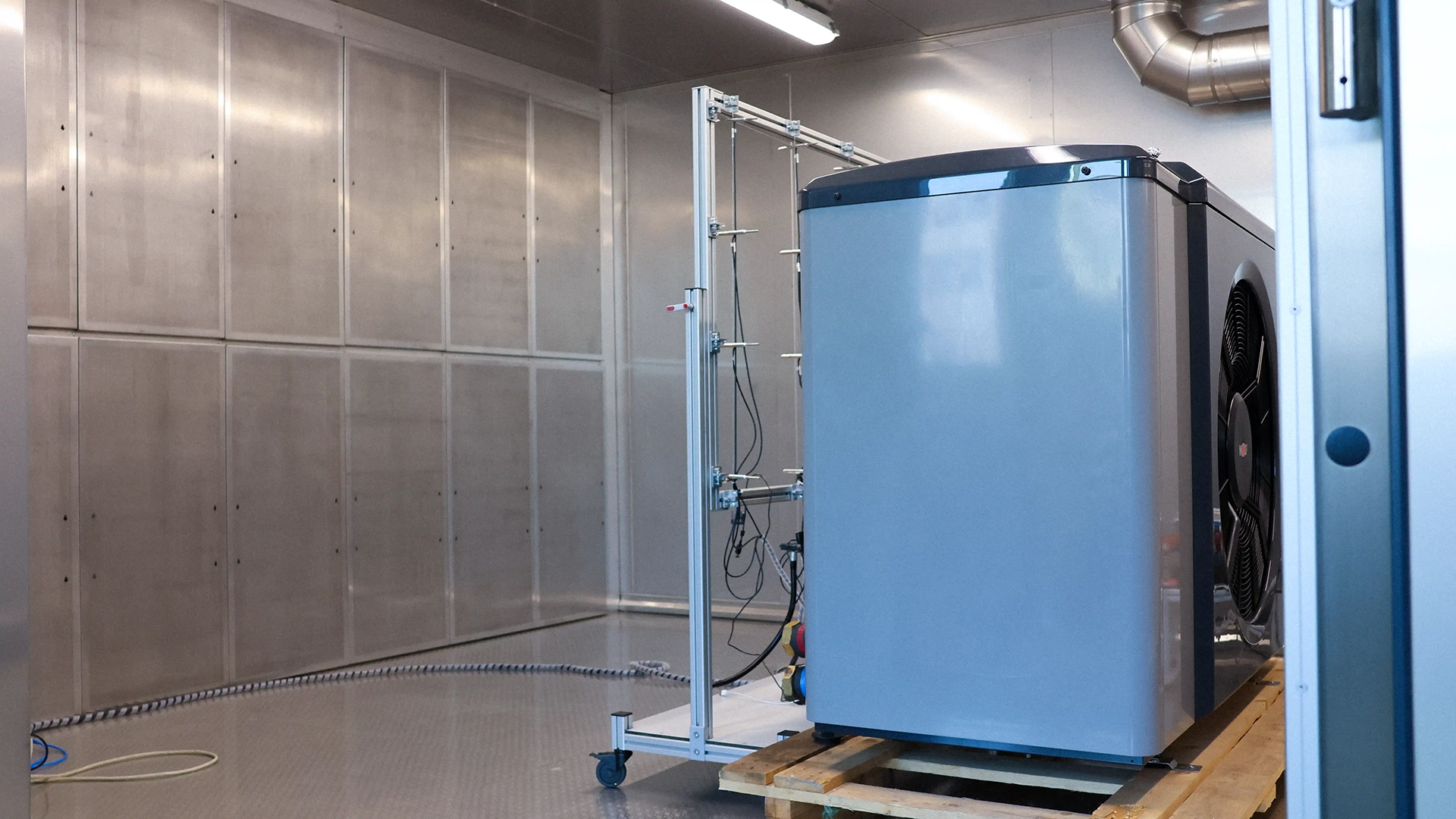

The Refrigeration Innovation Center (KIZ) in Landshut answers precisely these kinds of questions. Here, ebm-papst tests air-to-water heat pumps and chillers—refrigeration units used to cool machinery and buildings—under realistic environmental conditions. The center was established in 2024/25 and Markus Gehrecke from the Center of Competence Refrigeration Cycle is responsible for its operation and further development.
More realistic testing
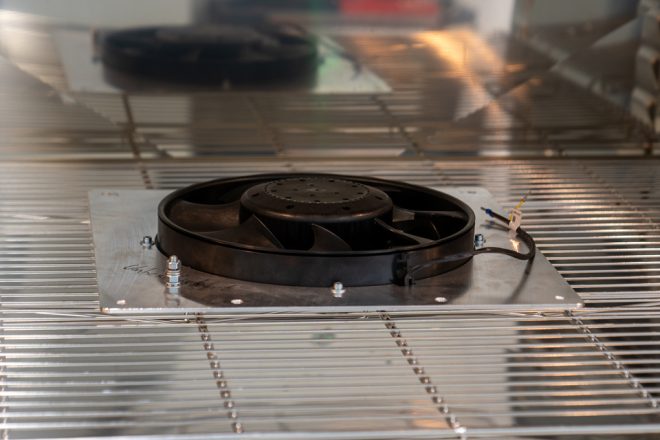
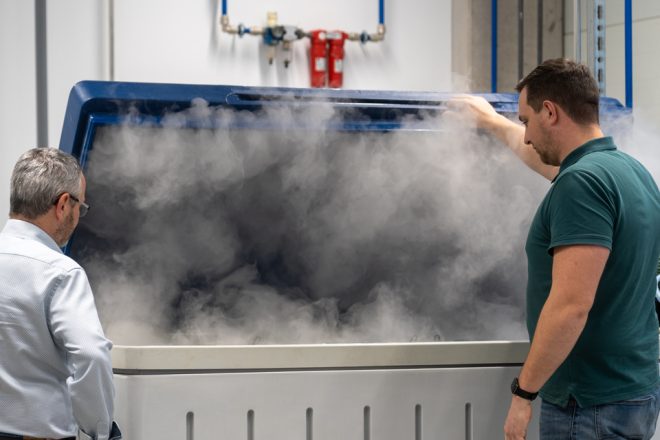
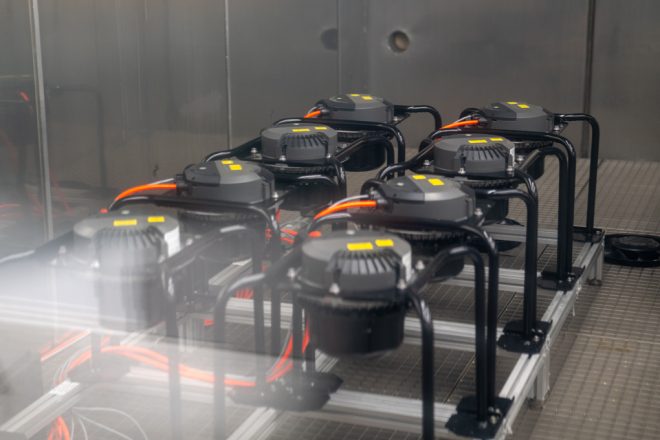
The KIZ essentially consists of two parts: a climate chamber and a water test bench. The climate chamber simulates the outdoor conditions to which a heat pump is exposed during operation. It can be precisely controlled to heat, cool, humidify, and dehumidify. The air temperature can be set from −25 to +70 degrees Celsius, and the relative humidity from 10 to 95 percent. Air circulation is provided by a FanGrid consisting of four RadiPac radial fans from ebm-papst that deliver up to 21,000 m³/h, as required in the tests.
At the KIZ, we’re creating a test environment where we can better understand heat pumps and chillers and tailor our components specifically to them.
Markus Gehrecke, Center of Competence Refrigeration Cycle
This allows for the simulation of real-world operating scenarios—from freezing cold winters to hot summer days. The tests demonstrate how a heat pump reacts to changing outdoor conditions, and individual measurement data provides a more precise understanding of the entire system. “Issues such as icing or de-icing, in particular, can often only be evaluated during actual operation,” explains Gehrecke. “In the climate chamber, we can specifically recreate such situations and determine what impact they have on the efficiency and operational behavior of the heat pump and its components.”

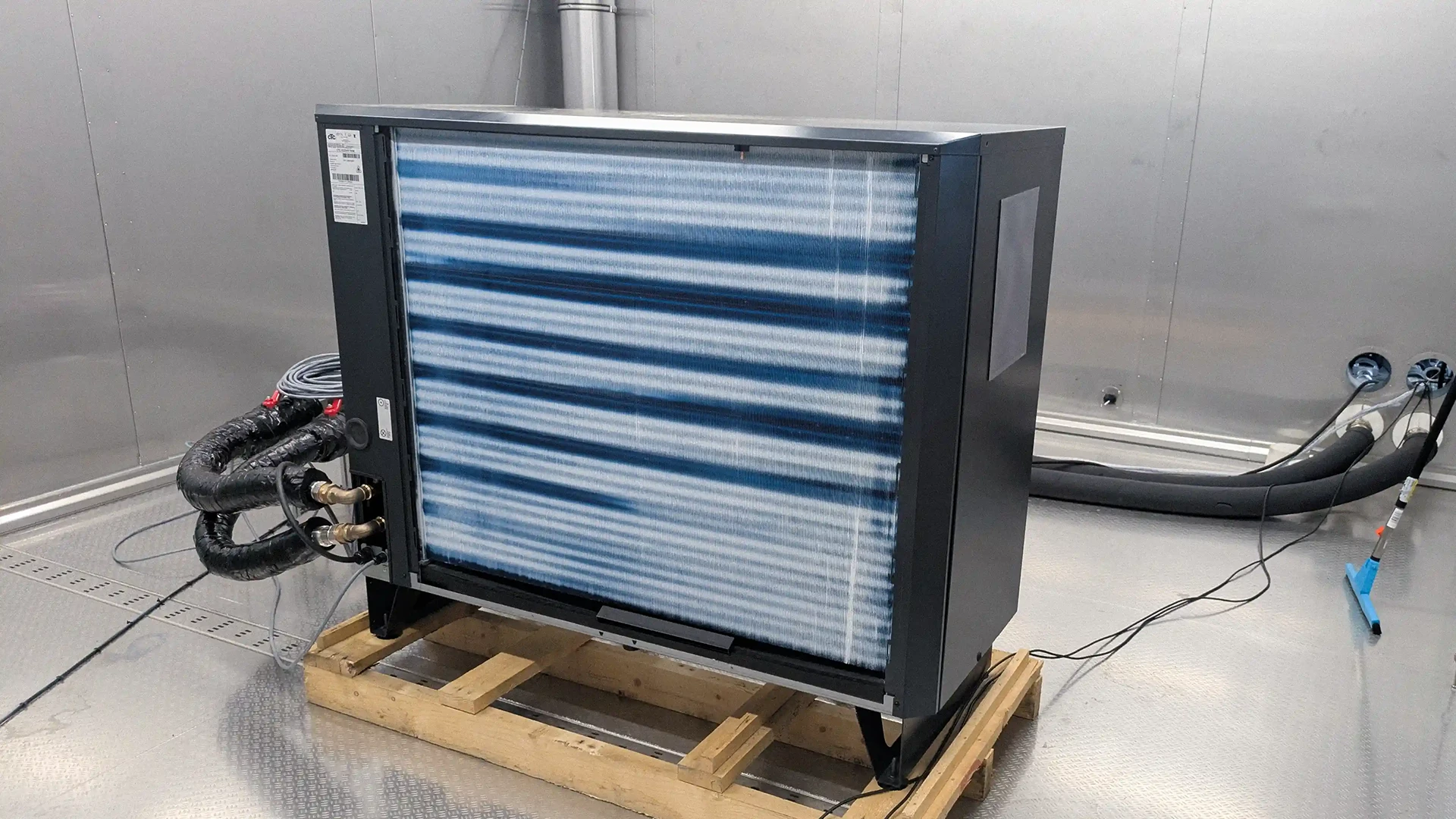
Whereas the climate chamber simulates the outdoor climate, the water test bench simulates the building side of the test heat pump—that is, the heating or cooling circuit that will later deliver heat to the house or remove heat from it. It measures how much heating or cooling capacity is delivered on the water side and how much electrical energy is required to do so. For this, it can specifically heat or cool water and records, among other things, flow rate, temperatures, electrical power, and heat output. These values are used to determine the coefficient of performance (COP). This metric indicates how efficiently a heat pump operates, or in other words, how much heat it generates from the electrical energy consumed.
Greater reliability for development and customers
For ebm-papst, the KIZ represents an important step toward gaining an even better understanding of the overall system of any heat pump or chiller. In the past, it was possible to test primarily individual components. Today, complete systems can be tested—with heating or cooling capacities of up to 26 kilowatts.
–0 bis +0°C
Air temperature range of the climate chamber
0 kW
maximum heating or cooling capacity in the test bench
0 bis 0%
adjustable relative humidity
The customers are the ones who benefit the most. After all, the closer a test is to the eventual application, the more reliable the results are. This allows technical issues to be addressed even before a system is operational in the field. “For our customers, this means we’re not just a component supplier, we’re a development partner,” says Gehrecke. “We can simulate specific applications and work together to determine what really matters during later operation.” In Landshut, heat pumps are already proving today what they’ll need to deliver later in the field.
Additional testing: the test center in Mulfingen-Hollenbach
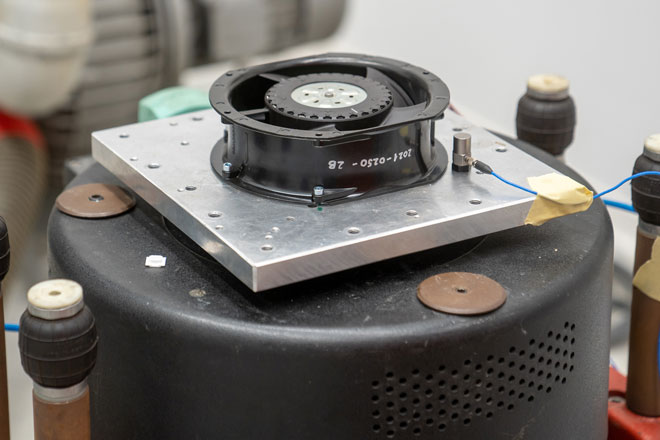
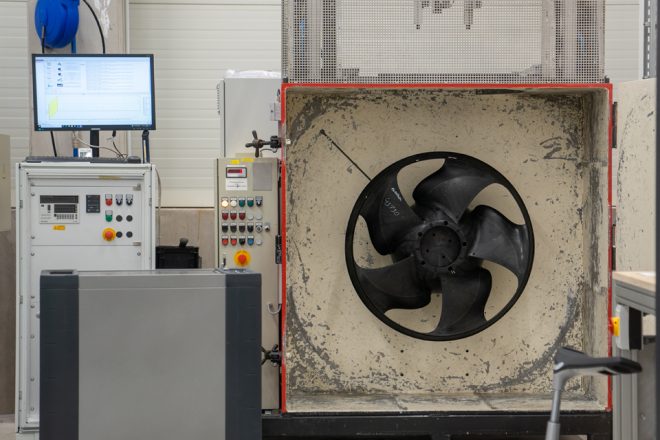
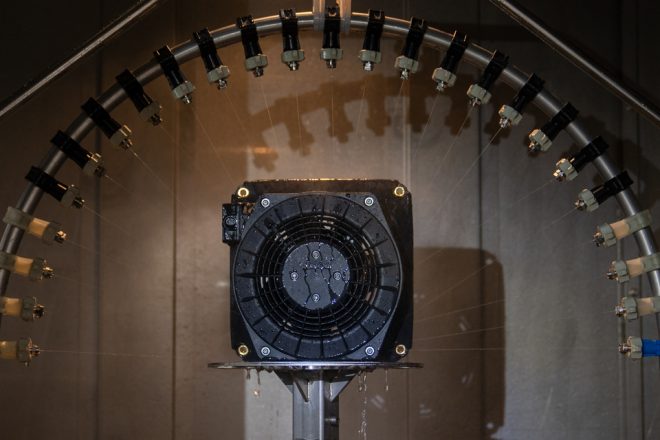
The KIZ in Landshut examines complete heat pump systems in real-world applications. At the testing center in Mulfingen-Hollenbach, on the other hand, ebm-papst tests the durability of the fans themselves. Every year, across approximately 2,500 square meters, several hundred fans, new sizes, and individual components undergo testing in real-world environmental conditions—including shock and vibration, climate, water, salt spray, and accelerated life tests. This allows ebm-papst to identify early on how products react to stress and whether they can reliably withstand the rigors of field use.
Exclusive insights into all test fields
Learn more about how ebm-papst puts fans to the test in the individual test fields. Each article with exciting insights, videos and pictures!
Leave a comment