
Exotic birds call out to one another beneath the tall canopy of trees. Monkeys swing from branch to branch, and a sloth rests contentedly in a treetop. Down on the ground, small alligators dart into the thicket, and frogs croak away. Yet this tropical landscape is far from the equator. It is in Gothenburg, Sweden. Here, endangered species live in the artificial rainforest of Universeum, the national science center. Each year, the center offers over half a million visitors a holistic perspective on how human behavior is changing our planet in the hopes that those who understand the world are more likely to advocate for its continued existence and a sustainable future. In addition to its educational mission, Universeum also leads by example and pursues the goal of continuously reducing its own energy consumption.
constant 28 degrees

approx. -60 % Energy


The Universeum
Sweden’s national science center combines interactive education with species protection. In addition to the tropical rainforest, there’s even more to discover: The Ocean Worldbrings visitors up close to the habitats of hundreds of fish species, sharks, and rays. In the Reptile House, they can discover various snakes and lizards. In the 360° dome, children and adults alike can gaze into space and learn about current space research. Interactive science areas also invite visitors to explore chemistry, mathematics, the human body, and new technologies such as artificial intelligence.
Source: Universeum

The Universeum’s tropical rainforest covers 18,000 cubic meters.
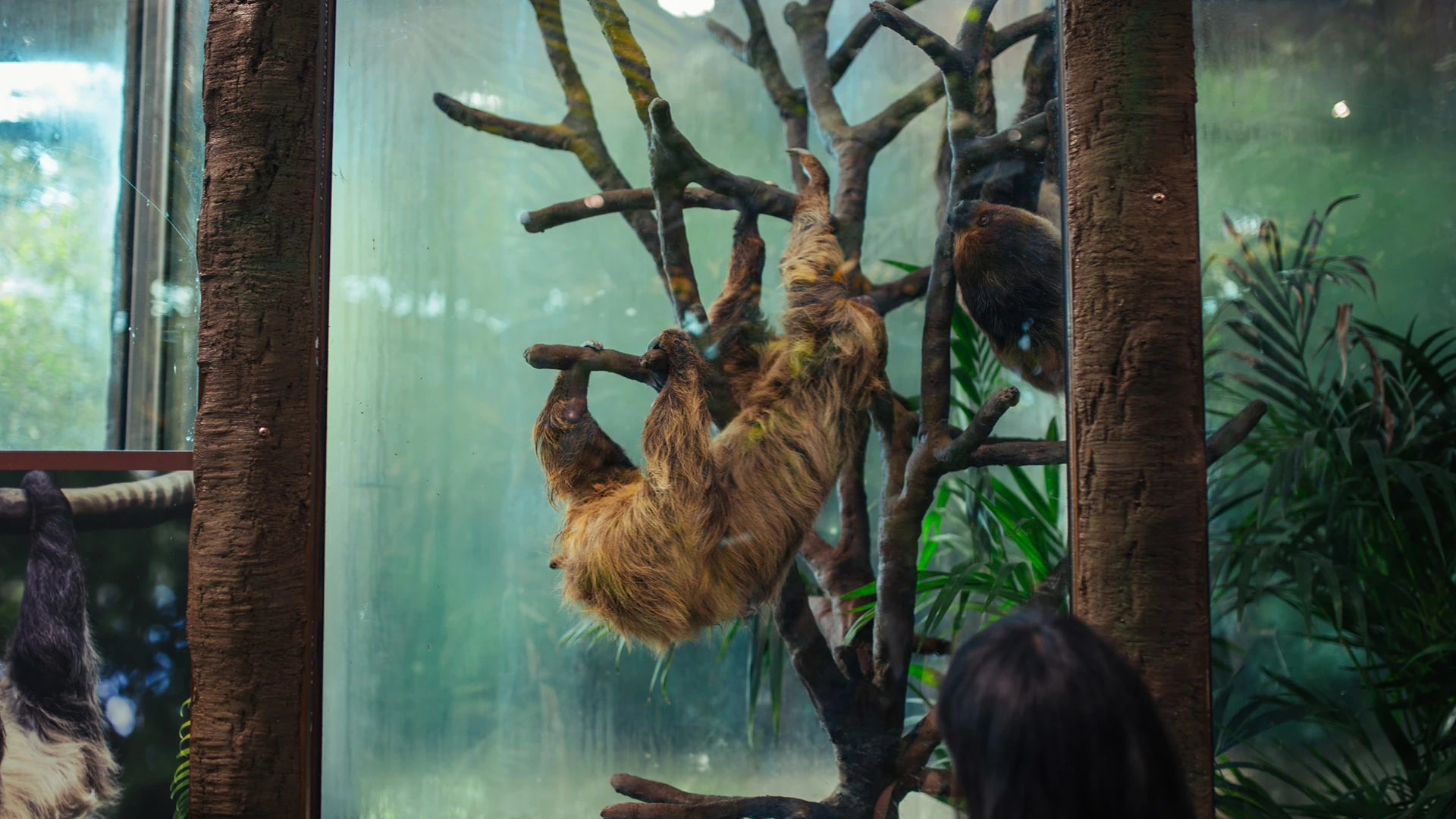
The animals need a constant room temperature of 28 degrees to live healthy and happy lives.
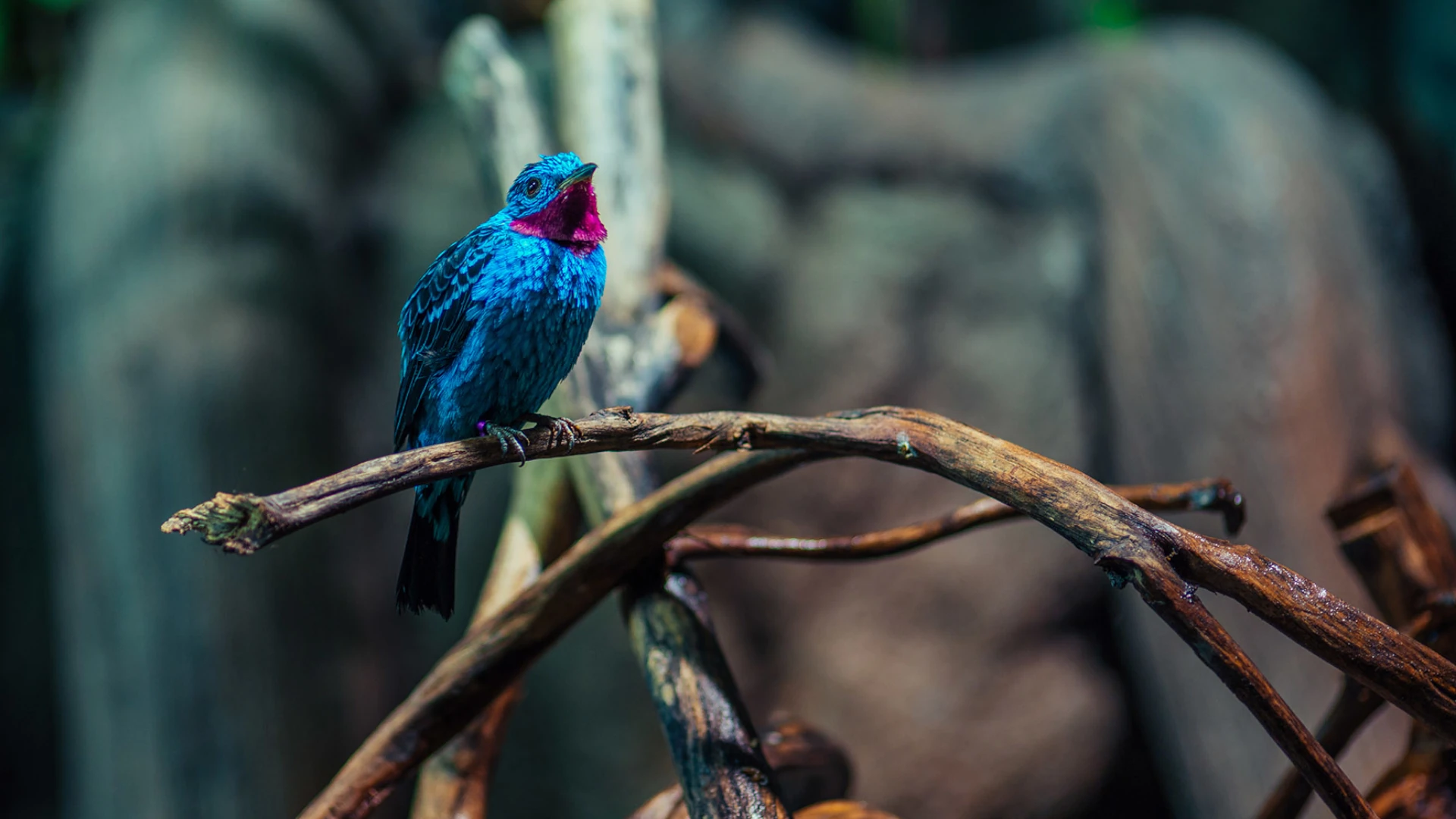
Visitors observe the animals across five floors—from the ground up to the treetops.
Life-sustaining heat
Modernizing the rainforest’s ventilation systems with a retrofit to save energy was actually planned for a later date. But when the system’s only fan failed after 25 years, the issue became critical. Gunnar Blom, COO of Universeum, explains: “Endangered animal species live in our rainforest. Our main goal is to take good care of them and to ensure they live healthy lives, we must maintain the temperature at exactly 28 degrees.” If this fails, the consequences are devastating. While birds and monkeys can tolerate temperature fluctuations for a short time, sloths require a constant climate to survive due to their slow metabolism.
Oskar Söderlund of Sustainable Intelligence, a long-standing partner of Universeum for HVAC systems, knew how to remedy the situation: “We’ve been working with ebm-papst on such tasks for several years. So, I also contacted Sales Engineer Henrik Heikel for this project, and together we developed a solution.”


Three RadiPac units are heating up the rainforest
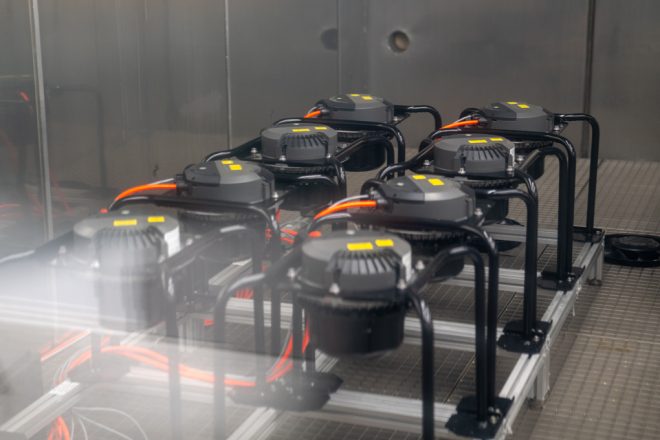
The facility’s old, belt-driven fan sucked in air, which was heated by a heating coil, and blew it through air vents into the rainforest building. For the retrofit, Söderlund and Heikel decided to replace the old fan with three new RadiPac radial fans featuring FlowGrid from ebm-papst. These distribute the warm air more evenly in the room The effect is enhanced by the integrated FlowGrid guide vane. Söderlund explains: “Since the temperature loss is so much lower than before, we can reduce the outlet temperature of the heating coil while maintaining the same performance.”
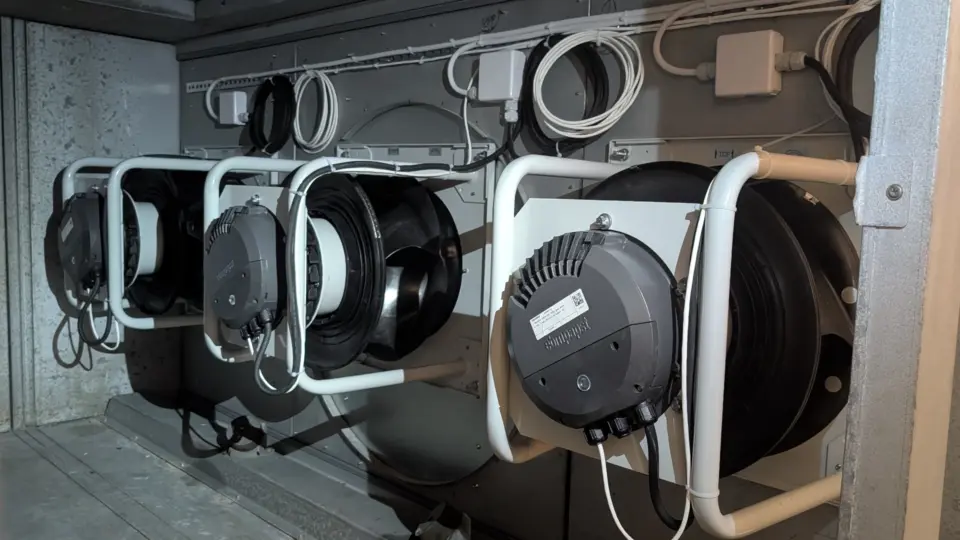
To prevent downtime, they have ensured redundancy with three fans: “Should one of the new fans fail, the remaining ones will keep the temperature stable until repairs are made, so the animals stay warm.” But to ensure long-term operational reliability, the retrofit partners are going one step further.
Tropical data collection with MMCU
Computer-assisted real-time data acquisition of industrial processes is already widespread in Sweden. To integrate this technology into Universeum’s existing system, Oskar Söderlund and Henrik Heikel are installing a Modbus Monitor & Control Unit (MMCU) from ebm-papst in the facility’s control cabinet. This unit reads data from the Modbus interface, which is standard equipment on the RadiPac. Henrik Heikel explains: “Since the fans work in high ambient temperatures, monitoring motor and electronics temperature is essential for long-term reliability. The MMCU acts as a kind of hub that allows us to monitor relevant information. For example, the rotation per minute to ensure the correct temperature inside the enclosure. With Modbus we can also move beyond that and use real operating data to protect the equipment and maintain a stable temperature for the rainforest.”

A consistent temperature also helps stabilize humidity levels, which is controlled via a separate system. In addition, the MMCU monitors whether the fans in the warm environment maintain their optimal operating temperature so that they can operate safely over the long term. And the system can be adjusted as needed, says Söderlund: “In the summer, we do not need to compensate for the outside temperature as much as we do at -16 degrees in the winter to maintain the temperature in the rainforest. This allows Universeum to save up to 60 percent of its previous energy consumption.”

Since the fans work in high ambient temperatures, monitoring motor and electronics temperature is essential for long-term reliability. The MMCU acts as a kind of hub that allows us to monitor relevant information.
Henrik Heikel, Sales Engineer at ebm-papst
One step closer to the climate goal
Now, as a result of the retrofit in the Swedish rainforest, nothing stands between a sloth and its cozy life. To achieve the center’s climate target, Gunnar Blom plans to modernize several more systems at Universeum over the next few years. He is optimistic about the future: “A strong relationship between us as a client and our suppliers is the key to developing solutions that benefit everyone. When a retrofit reduces energy consumption by around 60 percent, the benefits become tangible—even for partners who want to support us and our educational mission.”
Discover our testing center and gain detailed insights into the testing procedures:
Exclusive insights into all test fields
Learn more about how ebm-papst puts fans to the test in the individual test fields. Each article with exciting insights, videos and pictures!
Leave a comment