
Both motor types are based on DC technology, yet they differ significantly in design, operating principle and suitability for fan applications. This article explains the differences with a clear focus on fans, highlighting why brushless motors have become the preferred choice in many ventilation systems today.
The role of the motor in fan technology
A fan is not just an impeller driven by a motor. Its overall performance results from the interaction of aerodynamics, motor, electronics and control strategy. The motor has a decisive influence on:
- system efficiency
- controllability and operating point adjustment
- noise emissions (mechanical and electrical)
- service life and maintenance requirements
- integration into intelligent and networked systems
Since fans are often operated continuously or for very long periods, motor selection plays a critical role in reliability and energy efficiency.
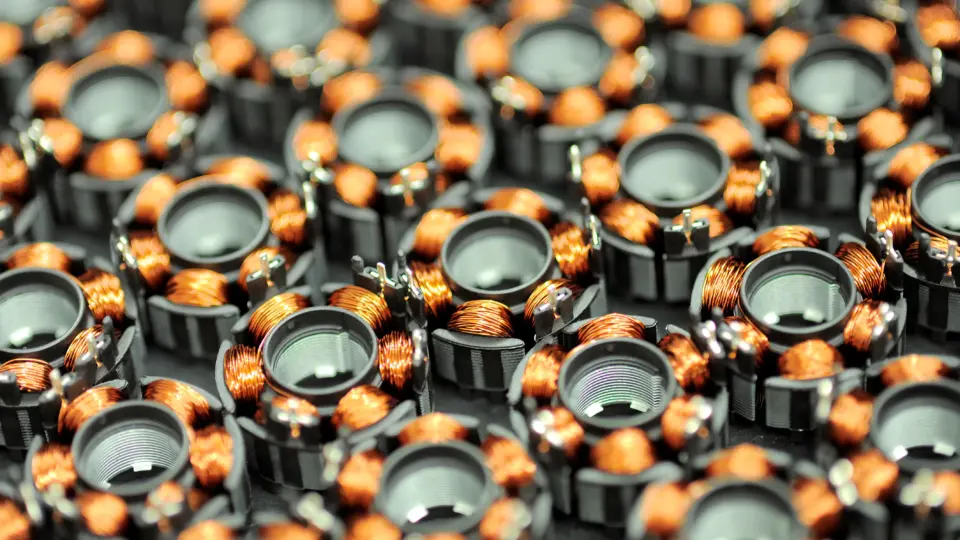
Brushed motors: operating principle and relevance for fans
In brushed motors, current is transferred to the rotor via carbon brushes. Commutation is therefore mechanical.
Typical characteristics in fan applications
- mechanical contact between brushes and rotor
- simple and proven design
- limited efficiency due to friction losses
- wear of brushes after several thousand operating hours
- increased maintenance effort
Assessment for fan use
In fan applications with long operating times or limited accessibility, brush wear represents a major drawback. Friction and electrical arcing lead to higher temperatures and electromagnetic interference, which can negatively affect efficiency, acoustic performance and service life. For these reasons, brushed motors are now only suitable for very specific, non‑continuous fan applications.
Fan selection made easy
ebm-papst has a flexible selection tool to help customers find their optimal combination of fans: The FanScout by ebm-papst is a powerful, web-based selection tool designed to support planners and manufacturers in the HVAC industry in identifying the ideal fan solution for their specific application. Accessible directly via browser without installation or updates, it offers an intuitive interface and always works with the latest product data. Users can define up to five application-specific operating points and apply a wide range of filters, including voltage, frequency, motor technology (AC/EC), installation space, and permissible noise levels. Sustainability criteria and lifecycle costs can also be factored in.
Brushless motors (BLDC): the standard in modern fans
In brushless motors, commutation is handled electronically. The rotor carries permanent magnets, while the stator contains the windings.
Key advantages for fans
- no mechanical wear due to brushes
- significantly higher efficiency
- reduced heat generation
- precise and continuous speed control
- very low noise levels
- ideal for continuous operation
For fans, brushless motors enable exact adaptation to the actual air demand, reducing both energy consumption and noise emissions.
Why brushless motors are particularly suitable for fans
Fan applications place specific demands on drive technology:
Many fans run around the clock. Brushless motors are designed for long service life and maintenance‑free operation, making them highly suitable for ventilation systems.
Fans often account for a significant share of a system’s total energy consumption. Higher motor efficiency directly reduces operating energy demand.
Electronic commutation minimizes torque ripple and mechanical contact noise, which is especially important in residential, commercial and office environments.
Brushless motors can be seamlessly integrated into modern control concepts, enabling demand‑oriented ventilation, monitoring and networking.
Comparison: brushed vs. brushless motors in fans
| Criterion | Brushed motor | Brushless motor |
| Commutation | mechanical | electronic |
| Wear | present | none |
| Efficiency | limited | high |
| Maintenance | required | maintenance‑free |
| Noise behavior | higher | very low |
| Suitability for continuous operation | limited | ideal |
FAQ – Frequently asked questions about motors in fans
Because wear, maintenance requirements and lower efficiency no longer meet today’s expectations for ventilation systems.
For most fan applications, yes—especially where long operating times, high efficiency and low noise are required.
It enables precise speed control, system monitoring and integration into intelligent, networked ventilation solutions.
The choice between brushed and brushless motors has a clear impact on fan performance. While brushed motors feature a simple design, they are limited in terms of efficiency, service life and acoustic behavior. Brushless motors, by contrast, meet the requirements of modern fan technology: high efficiency, reliability, quiet operation and intelligent controllability. As a result, they have become the standard drive technology for contemporary ventilation systems.
Leave a comment