In today’s aerodynamically sophisticated fans, impellers and inlet rings are usually made of plastic. Injection molding allows for precise design, enabling components to be manufactured with very small tolerances. However, the disadvantages of plastic in the event of fire include a build-up of gas and lower dimensional stability. For this reason, the use of plastic is often very limited in some markets, mainly in the USA, often in Asia, and to some extent in Europe (France).
Modern manufacturing for high-perfomance impellers
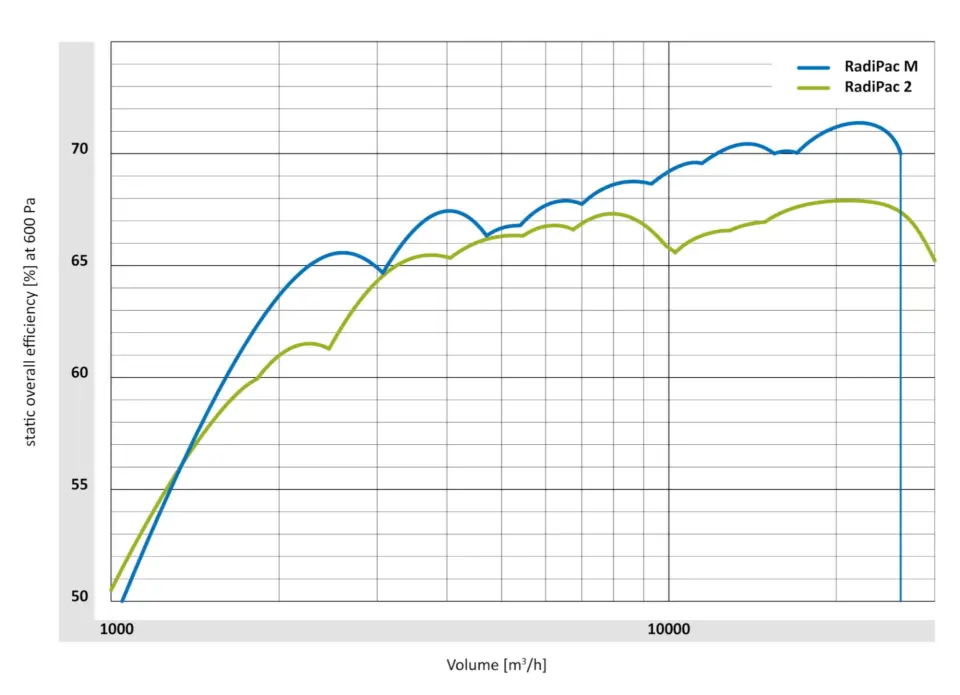
The fan experts at ebm-papst are therefore focusing on new and improved options in sheet metal forming and joining processes in order to develop modern, high-performance impellers that neither melt nor produce smoke in the event of a fire and can be used efficiently in any environment (Image 1). The aerodynamically most favorable designs for blades, bases and cover plates can be technically implemented (Image 2). Manufacturing tolerances are also very low today, and the air gap between the inlet ring and the impeller is smaller than in the previous metal design. This also results in higher efficiency in the new series (Image 3). If required, hybrid versions consisting of a metal impeller and a plastic inlet ring with a smaller air gap can be assembled for even greater efficiency.

Image 1: New 3rd generation RadiPac centrifugal fan in metal design. (Image | ebm-papst)
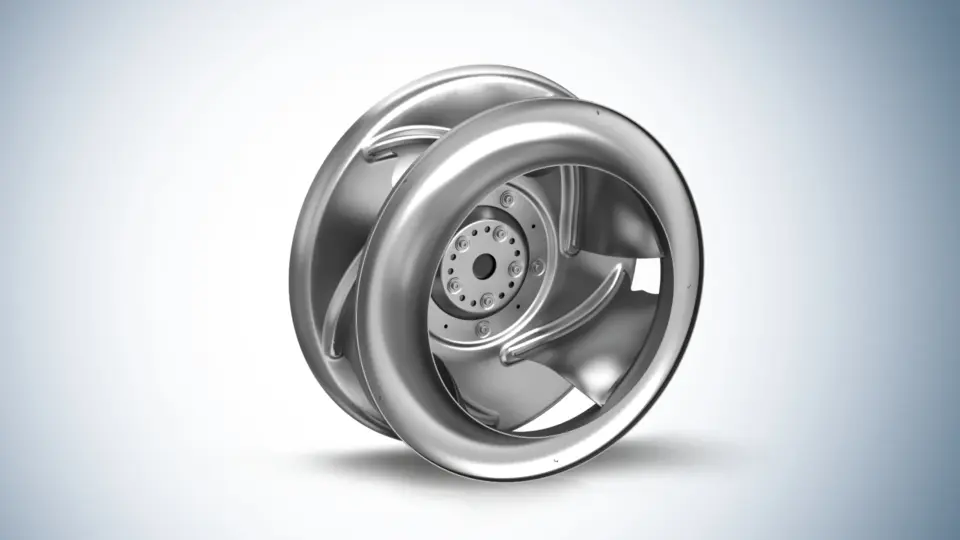
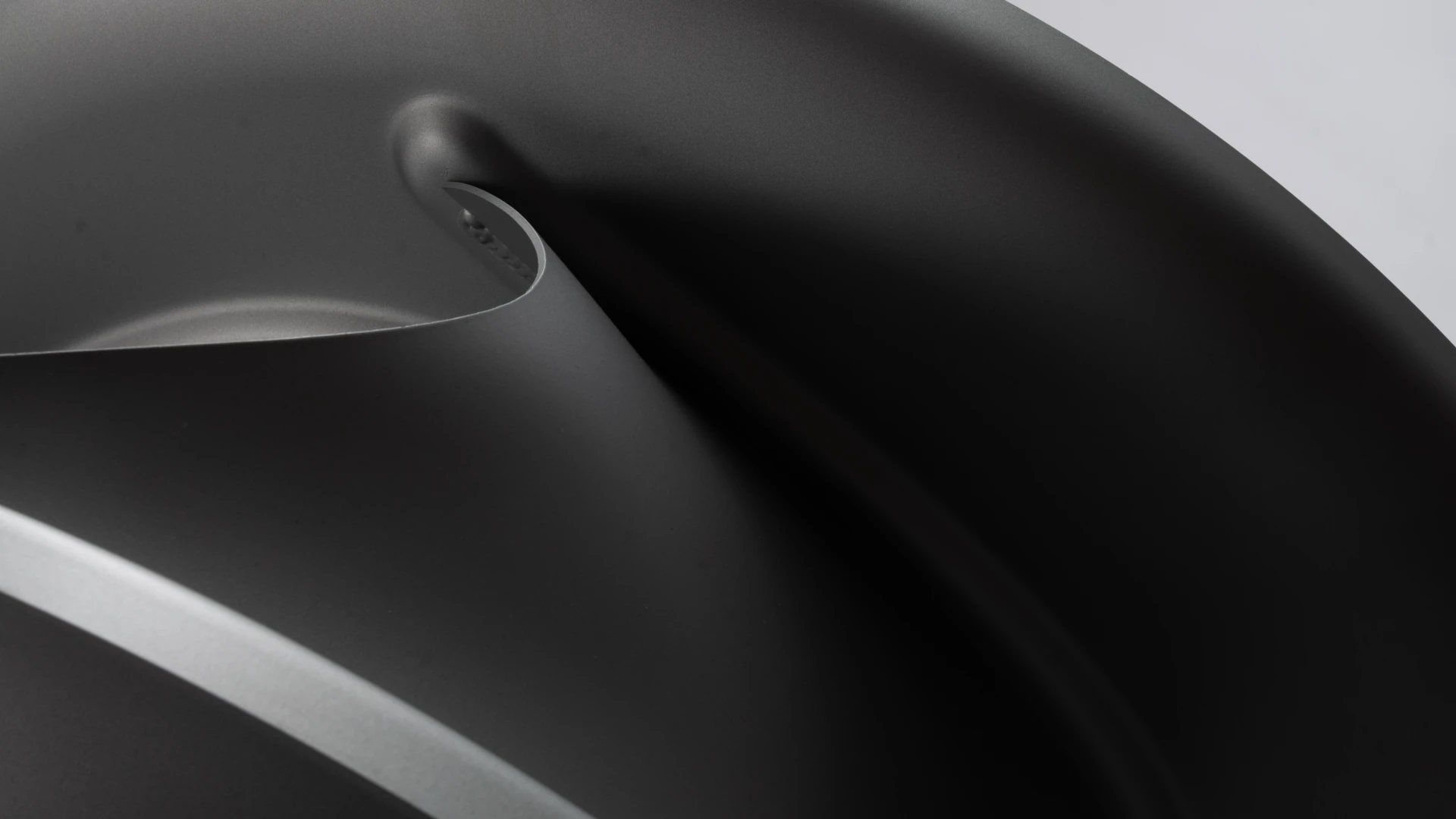
Figure 2. New forming and welding techniques make it technically feasible to produce blades, bases and cover plates with the most aerodynamically favorable design. (Image | ebm-papst)
The individual parts of the impellers are joined together to form a single unit using modern welding processes. The devil is in the detail: even with high production volumes, the manufacturing process must always deliver reproducible results with high dimensional accuracy and a long service life. However, welding as a thermal process is known to alter the metal structure and can lead to locally reduced strength. By optimizing the shape of the fan blades at the higher-stress exit edge, the stress can be shifted away from the joint at the blade root and into the unchanged material structure.
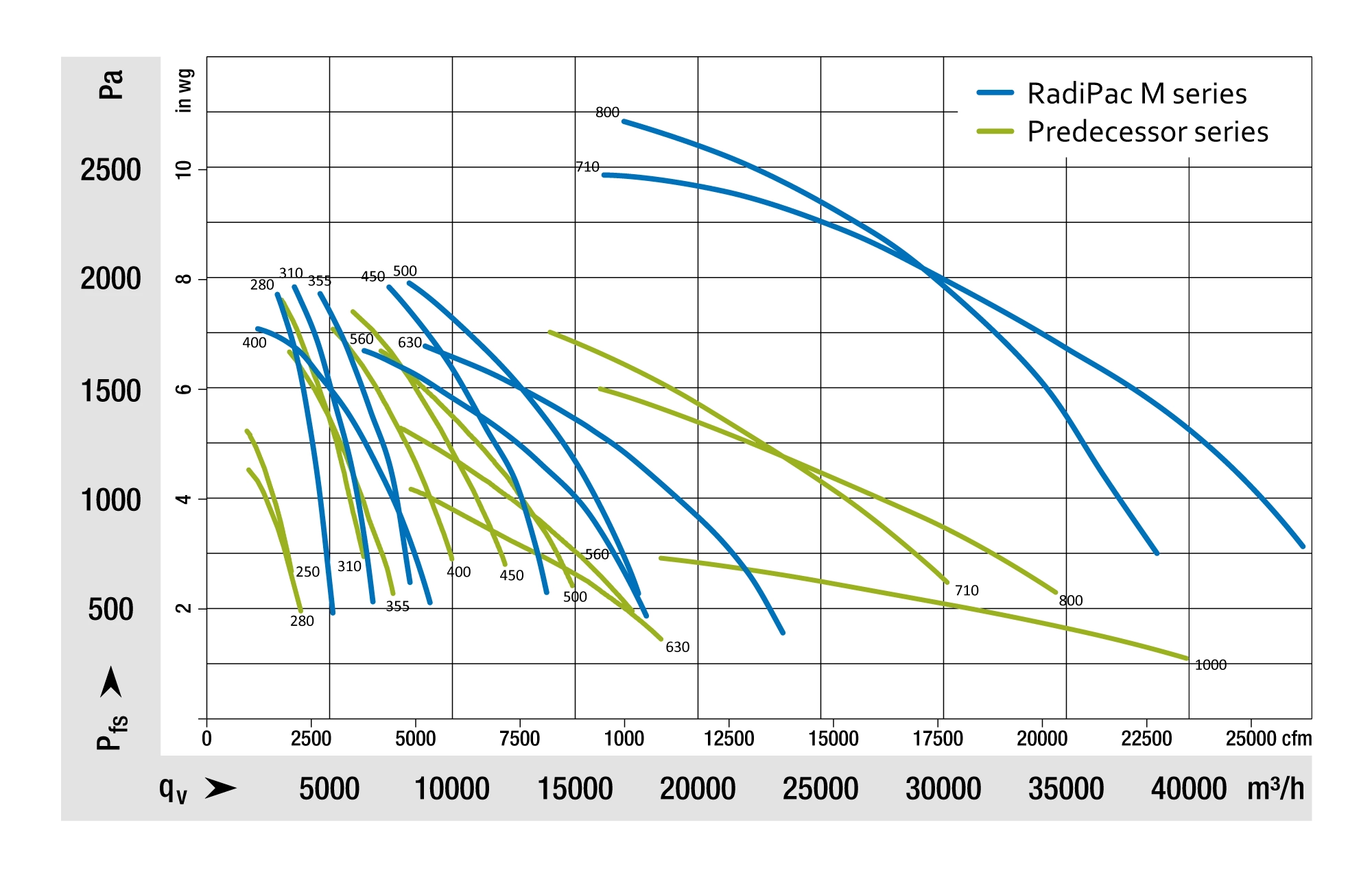
The individual parts, designed according to material-specific and aerodynamic considerations, allow for almost unrestricted 3D shaping. As a result, the impellers with five blades and improved geometry operate much more quietly and efficiently than their metal predecessors. Thanks to the improved strength of the impellers, even higher speeds can be achieved with almost identical weight. This also ensures increased air delivery with the same dimensions. The maximum impeller diameter is 800 mm (Image 3).

The RadiPac M sets new standards
Bernhard Siedler, global product manager for the RadiPac series, explains what’s behind it.
Sizes and applications of the RadiPac M
To ensure the most universal application possible, the changes to the third generation of RadiPac fans in metal design from ebm-papst were limited to the relevant assemblies. The mounting plate and numerous edge assemblies are virtually identical or more compact, making it easy to replace old fans (Image 5). Existing guide grilles for several identical fan units and inlet rings for the fans are also compatible. The fans in this series are available with impeller diameters from 280 to 800 mm and offer a motor power of approx. 170 W to 24 kW.
In addition, the larger sizes 710 and 800 can be equipped with more powerful motors, resulting in higher flow volumes with high efficiency. The latter corresponds to a flow volume of around 50,000 m³/h (free blowing) for the 800 mm fan and still 30,000 m³/h at a pressure increase of 2,000 pascals. Depending on the application requirements, RadiPac fans are available in a long (standard type) or, optionally, a compact short version. In the standard version, the impeller is located at the front of the motor, while in the compact version for space-critical applications, the impeller is attached to the rotor flange so that the motor protrudes into the impeller (Image 6).
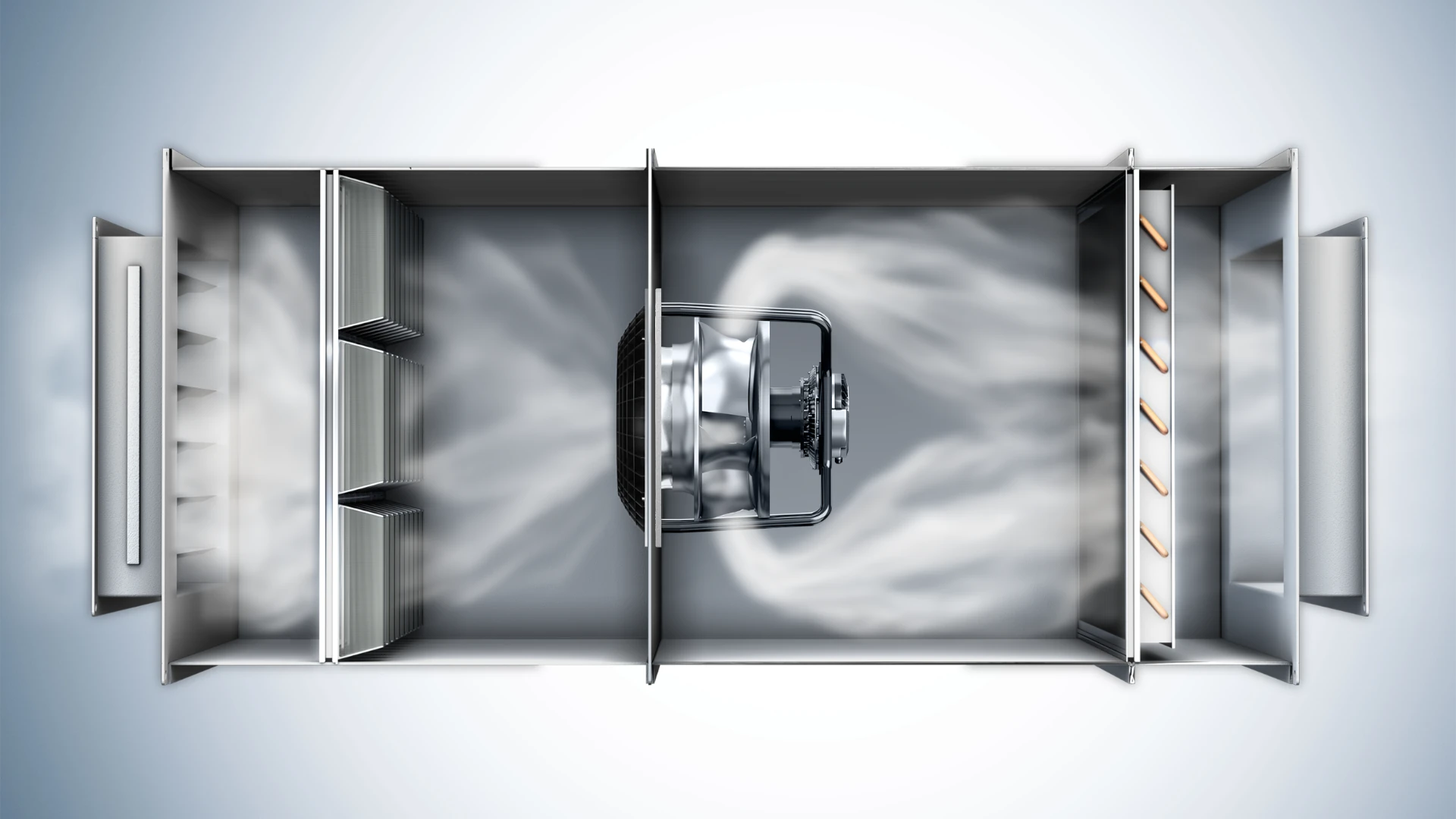
Image 5: Thanks to the plug & play design of RadiPac fans and their identical dimensions, replacing old fans is simple. (Image | ebm-papst)
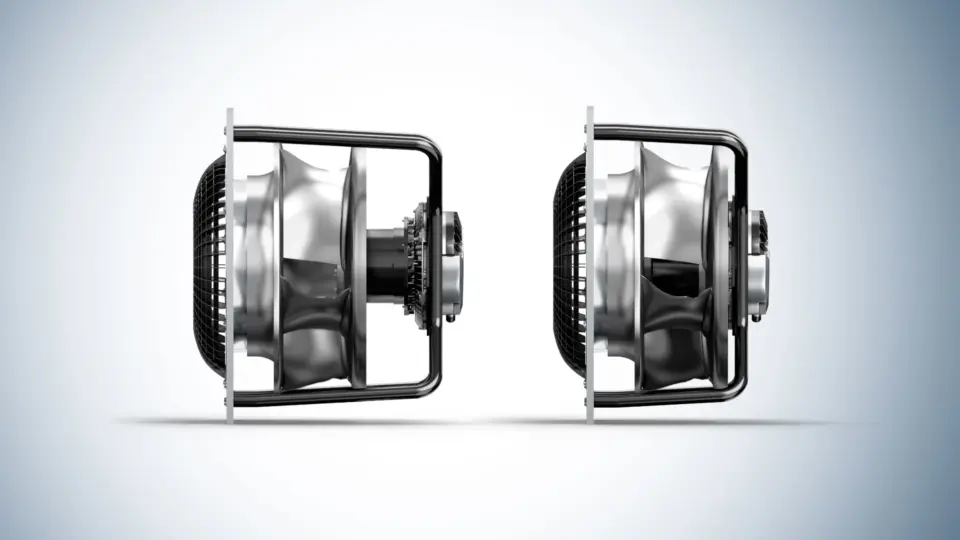
Image 6: Depending on the application requirements, the fans are available in a long (standard version) or short design. In the long version, the impeller is located at the front of the motor (left), while in the short version, the motor protrudes into the impeller (right). (Image | ebm-papst)
Electronics and motors with automatic resonance detection
Centrifugal fans are used in a wide variety of applications. Depending on the installation situation, resonance can occur in certain speed ranges. If a fan is frequently operated in such a critical range, the bearing system of the drive motor can be damaged, leading to premature failure of the fan. Although these vibrations can be measured by plant operators, they cannot be easily eliminated. ebm-papst solves this problem in RadiPac centrifugal fans with automatic resonance detection. During start-up to nominal speed, this system registers possible application-specific resonance speeds, which are then avoided or quickly passed through during subsequent operation.
This protects the bearings and increases reliability. All fans can be controlled via 0-10 VDC or MODBUS RTU, are equipped with integrated EMC filters, and comply with the relevant EU and/or UL approvals for the US market. In addition, it is possible to monitor the fans remotely, as well as to simply integrate sensors into the fan control system. Furthermore, the EC motors have been adapted to current requirements, which do not require expensive rare earth magnets. High efficiency across the entire speed range, in conjunction with intelligent control, allows for energy-saving operation that is precisely tailored to the respective air requirements.
Leave a comment