For years, the Ecodesign Directive has formed the overarching legal framework for energy-related products in the EU. On this basis, the European Union issues product-specific implementing regulations: For fans, this is the Fan Regulation. The revised version (EU) 2024/1834, published in 2024, is known in the industry as ErP 2026.
This new regulation replaces the previously valid Fan Regulation (EU) No. 327/2011 (ErP 2015) and tightens the minimum requirements for fan efficiency that have been in force for the last fifteen years (Figures 1 and 2). The regulation applies to fans with an electric input power between 125 W and 500 kW and will be implemented in stages from 2026 and 2027. In addition to stricter efficiency limits, the regulation focuses more on the fan as a functional overall system and supplements the requirements with extensive information, repair and documentation obligations.
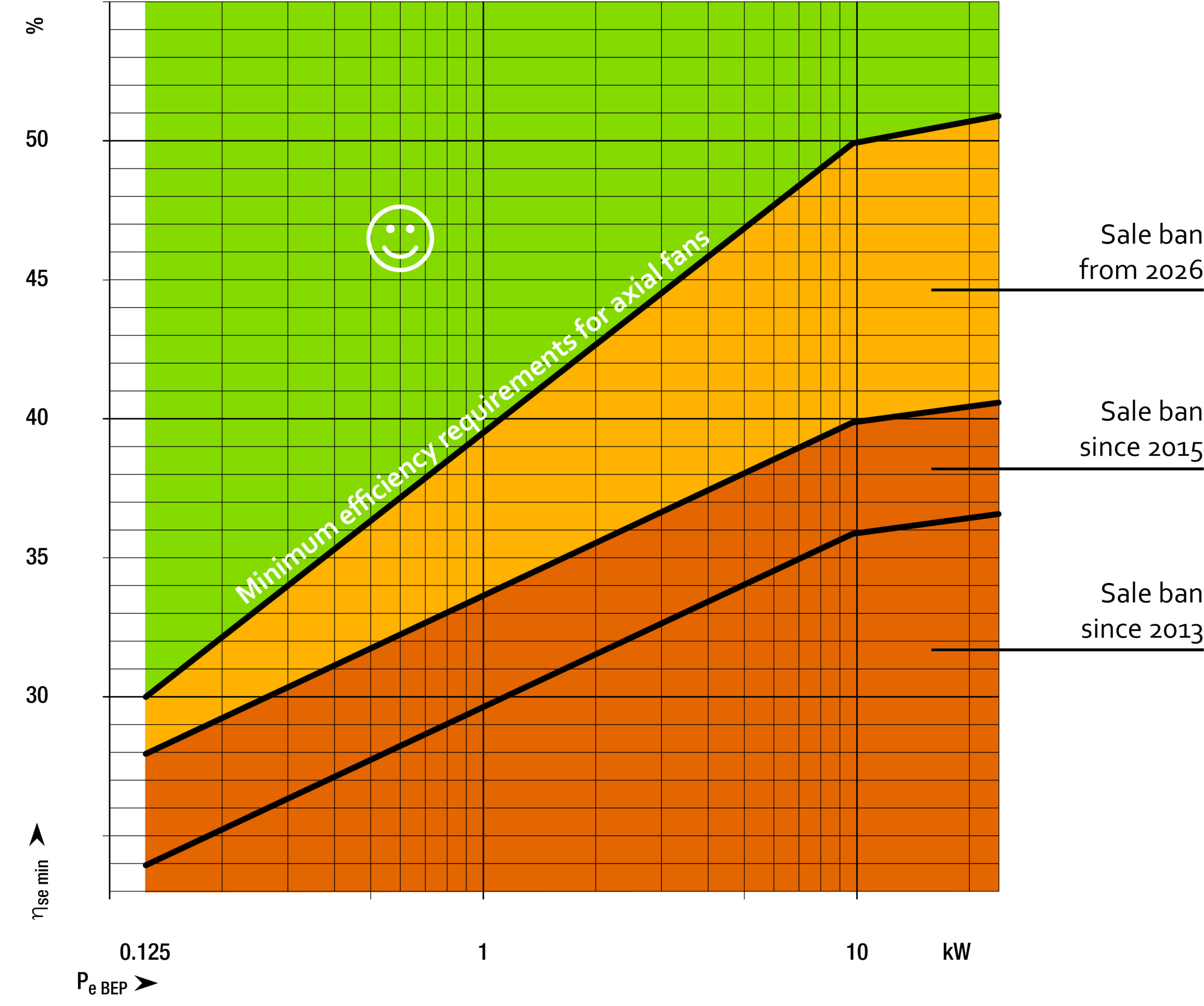
Figure 1: The minimum efficiency requirements for axial fans have been gradually increased since 2013. From 2026, a minimum fan efficiency grade of 50 percent will apply—the decisive factor is the total static efficiency at the best efficiency point. (Pe = electrical input power; ηmin = minimum fan efficiency; ηse = total static efficiency; BEP = best point) (Image | ebm-papst)
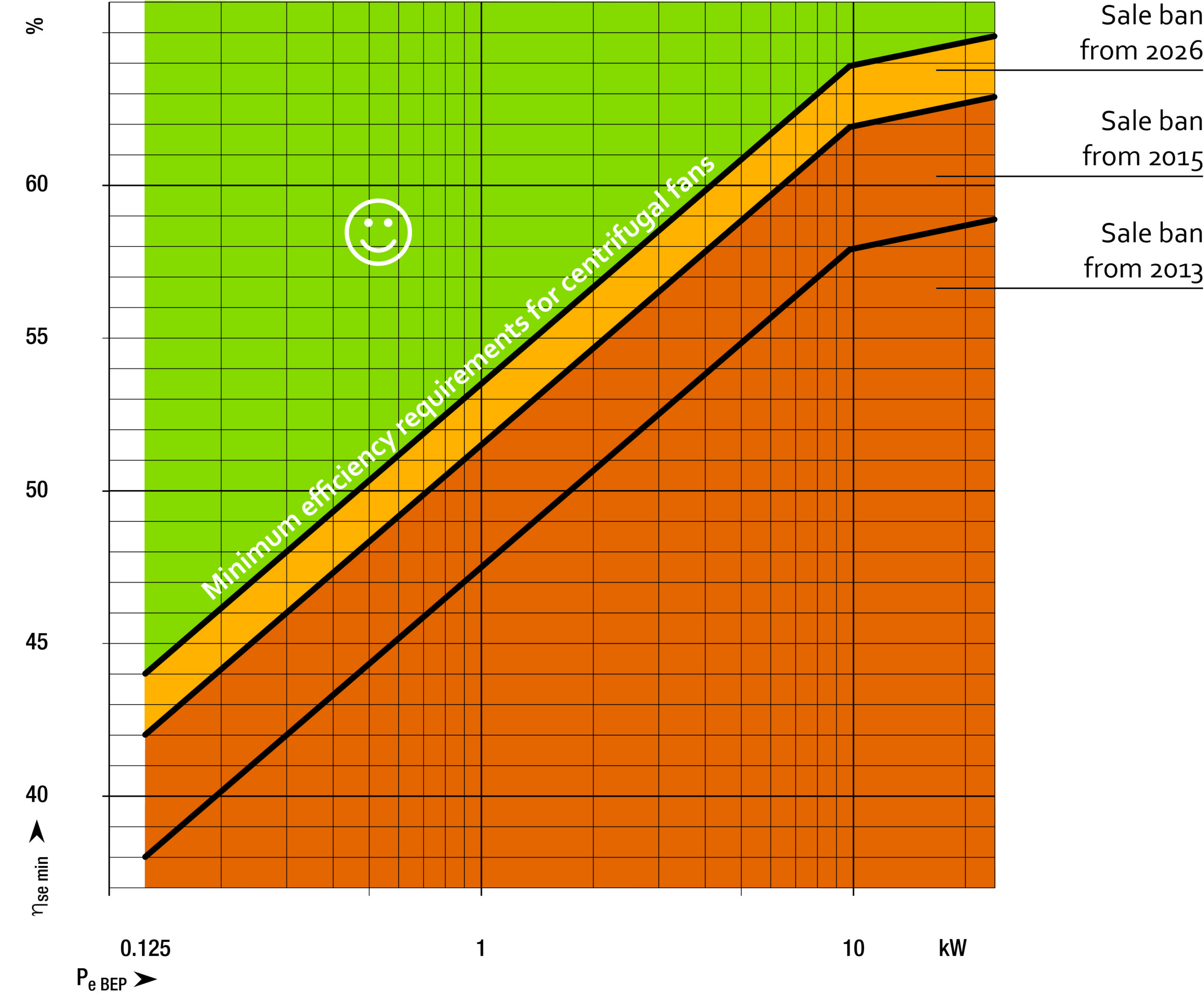
Figure 2: Requirements are also continuing to rise for centrifugal fans with backward-curved blades. From 2026, the minimum fan efficiency grade required will be 64 percent, setting a new benchmark for efficiency. (Pe = electrical input power; ηmin = minimum fan efficiency; ηse = total static efficiency; BEP = best efficiency point) (Image | ebm-papst)
The complete fan as the central reference value
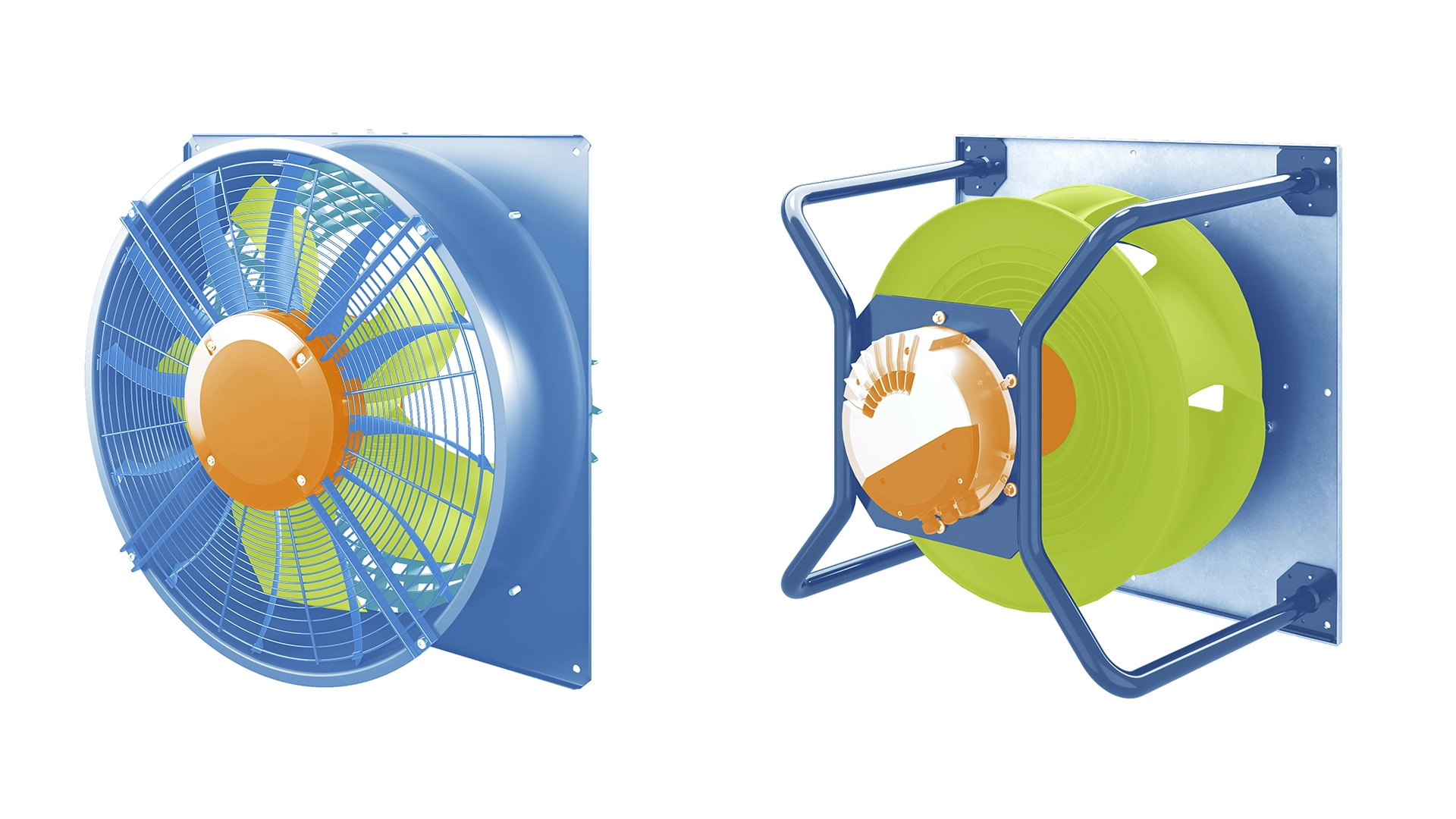
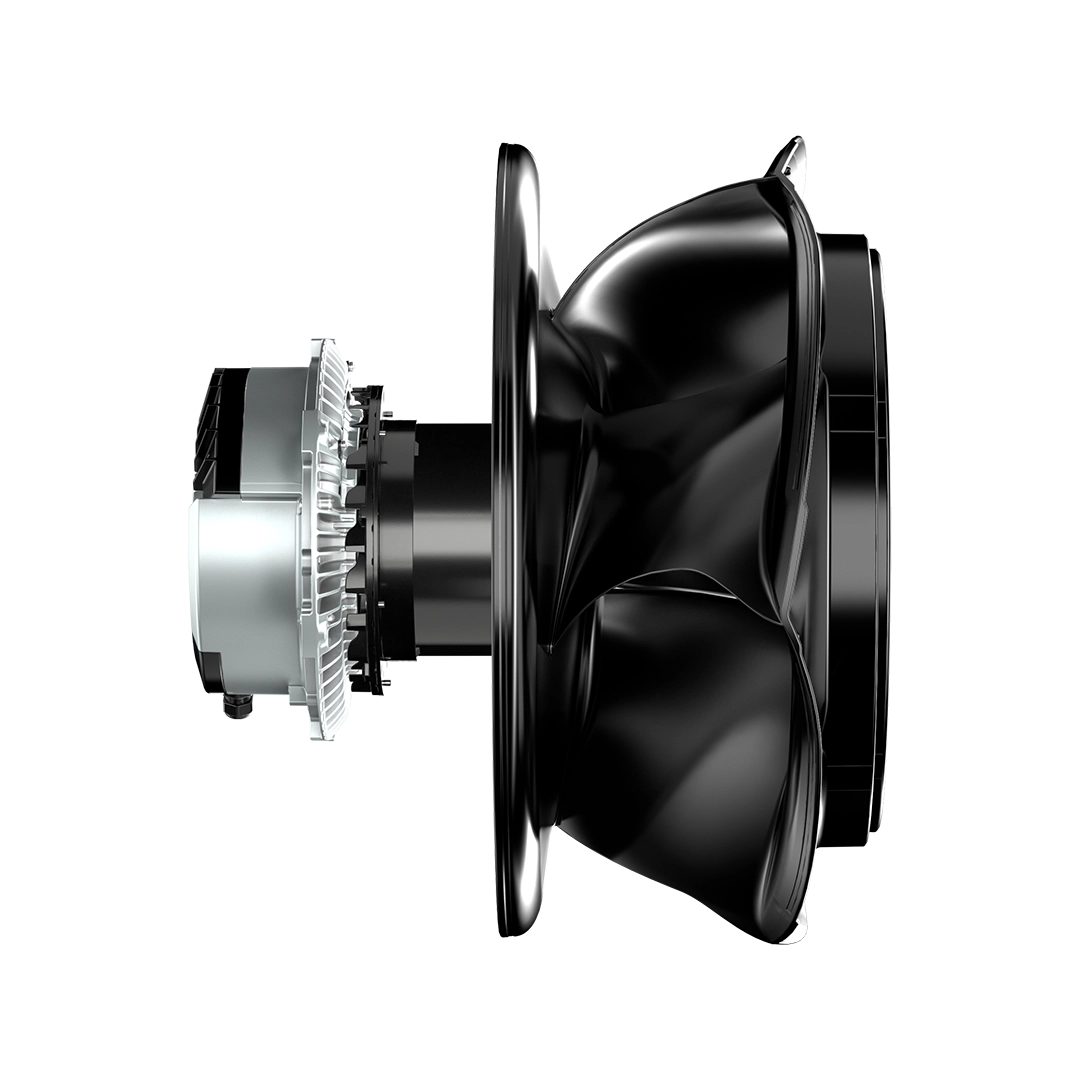
For the first time, the revised regulation clearly specifies when a fan is considered complete in the regulatory sense. The decisive factor for determining completeness is the combination of stator, impeller and motor—only their interaction defines a fan within the meaning of the regulation (Figure 3).
Products in which one or more of these components are missing or are placed on the market separately are referred to by the fan industry as “incomplete fans.” This distinction has far-reaching consequences: Any company that manufactures an incomplete fan, integrates it into a device and places it on the market under their own name is considered a manufacturer for regulatory purposes—with all the resulting obligations regarding conformity assessment, CE marking and fulfillment of other ErP requirements (Figures 4 and 5).

Questions about ErP 2026?
Dr.-Ing. Julien Grilliat, Head of Regulatory Affairs ebm-papst
Stricter efficiency requirements and new assessment approaches
ErP 2026 significantly raises the minimum efficiency levels that have been in force since 2015. Efficiency will continue to be assessed using the Fan Efficiency Grade (FEG) but is now based on updated reference points and measurement conditions. The aim is to provide a more realistic representation of the operating behavior of modern fans, especially under partial load conditions. While the minimum requirements continue to be assessed at the best efficiency point, detailed information on partial load behavior must also be documented and provided.
The new regulation thus takes into account the fact that fans are not continuously operated at their design point in many applications. Today, efficiency gains are achieved less through pure peak efficiencies and more through a broad efficiency optimum over a wide characteristic curve range. Aerodynamically optimized impellers, low-loss motor technologies and precise electronic control are therefore becoming more relevant.
Impact on designs and system integration
The stricter efficiency limits and modified evaluation methods have a direct impact on the design of fans and entire systems. Certain designs are becoming problematic, while other concepts are gaining in viability.
In particular, the coordination between impeller geometry, motor and power electronics is becoming a decisive factor. Flow-related losses during installation, unfavorable airflows or non-optimized housings can prevent efficiency reserves from being fully exploited in real-world operation. Considering the fan as a whole therefore forces manufacturers and plant engineers to adopt a holistic approach to system design.
Documentation, information and repair obligations
In addition to efficiency requirements, ErP 2026 expands obligations relating to transparency, repairability and life cycle assessment. Manufacturers will have to provide significantly more product information in the future. This includes efficiency values for defined operating points, information on partial load behavior and technical data on disassembly and repair.
The regulation thus specifically strengthens the possibilities for repairing fans. It stipulates that defined spare parts must be available and implemented in such a way that they can be replaced professionally and without causing permanent damage to the product. In addition, professional repair service providers receive access to these spare parts and the necessary repair information. ebm-papst is implementing these requirements, making all needed spare parts and the corresponding information available to qualified repair service providers.
Spare parts must also be available for up to ten years after product discontinuation, while product information must be stored digitally for up to 20 years. These requirements significantly increase the organizational effort and require robust documentation and data management processes.
Consequences for OEMs, importers, plant manufacturers and operators
The new fan regulation affects far more than just traditional fan manufacturers. OEMs, importers, plant manufacturers and operators must also reassess their role in the regulatory context. Dr. Julien Grilliat, Director of Regulatory Affairs at ebm-papst, observes a great deal of uncertainty in the market: “Many companies underestimate how quickly they can become fan manufacturers in regulatory terms through integration or completion.” The consequences range from the obligation to measure efficiency and prepare technical documentation to the CE declaration of conformity.

Many companies underestimate how quickly they can become fan manufacturers in regulatory terms through integration or completion.
Dr.-Ing. Julien Grilliat, Head of Regulatory Affairs ebm-papst
For operators, the choice of fan used is becoming increasingly important from a strategic perspective. Efficiency, spare parts availability and regulatory compliance have a direct impact on operating costs, system availability and investment security.
Transitional periods and schedule
The regulation will come into force on July 24, 2026. It distinguishes between so-called “stand-alone” fans and fans that are integrated into other products or applications, such as ventilation units, heat pumps or refrigeration systems. For these integrated fans, the ErP 2026 requirements will only apply from July 24, 2027, provided that the first unit of the respective product was placed on the market before July 24, 2026.
In practice, replacement parts for fans will not be required until July 24, 2028. Fans that do not comply with ErP 2026 may then only be placed on the market as replacements under clearly defined conditions—and only if no suitable compliant replacement is available and the use is clearly marked as a replacement part. In this case, the regulation refers to replacement fans.
How ebm-papst supports customers in the transition to ErP 2026
Ready for 2026?
More background information, schedules and services related to the new ErP Regulation can be found on the official ebm-papst information page.
The requirements of ErP 2026 necessitate close integration of regulatory expertise and technical development. ebm-papst therefore pursues a holistic approach: The company analyzes the regulation at an early stage, interprets it in consultation with European expert committees and systematically translates the requirements into product development, portfolio strategy and customer consulting.
A key component is the consistent design of the fan as a complete system. ebm-papst supplies fully assembled fans including motor, impeller, stator and electronics from a single source. Efficiency assessment, measurement and documentation are carried out at the system level. Customers receive ready-to-install solutions with clear regulatory classification, without additional work to create their own efficiency certificates or conformity assessments.
At the same time, ebm-papst is reviewing its entire portfolio for ErP 2026 compliance. The company is replacing products that do not meet future requirements with more efficient new developments. However, today many current EC fans from ebm-papst already meet the stricter efficiency limits. Customers can use ebm-papst’s digital FanScout design tool to select the fans that meet their requirements and thus identify ErP 2026-compliant solutions at an early stage (Figure 6).

In addition, ebm-papst supports its customers with specific services—from measurements in its own laboratory to assistance with technical documentation and training. “Our goal is to reduce regulatory complexity for our customers as much as possible,” emphasizes Dr. Julien Grilliat: “This allows them to concentrate on their applications while still maintaining complete planning security.”

Finding the right fan for every application
Simply with the new, web-based FanScout selection tool from ebm-papst.
ErP 2026 as a technical and strategic turning point
With the revised Ecodesign Directive and Fan Regulation, the EU is shifting the standards for efficiency, transparency and system responsibility in ventilation technology. ErP 2026 not only changes limit values but also defines the complete fan as a central reference value and makes efficiency a holistic system property.
Companies that address the technical, organizational and regulatory requirements at an early stage will secure decisive advantages. With systemically designed fans, clear manufacturer responsibility and comprehensive support, ebm-papst accompanies its customers on the path to compliance with ErP 2026 and the future-proof design of ventilation systems.
Leave a comment