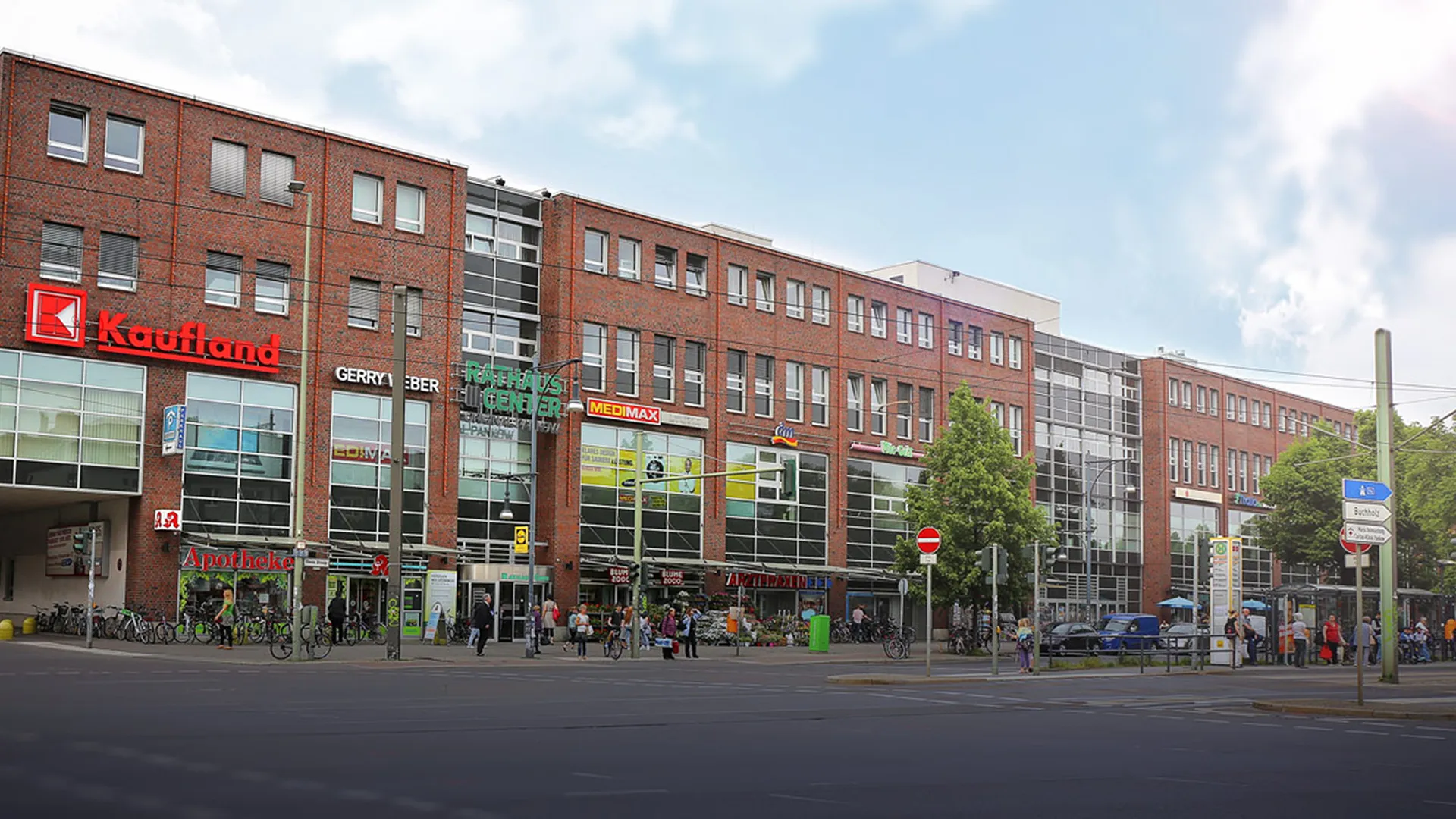
Located in the heart of the lively Pankow district, the Rathaus-Center attracts thousands of visitors every day. With everything from fashion to technology and food, the shopping center has been an important retail hub in northern Berlin for almost 30 years. However, as in many buildings from the 1990s, the ventilation systems were outdated, inefficient and prone to failure in some areas.
-270,514 kWh


-130.41 t CO₂

After finally deciding to modernize the ventilation step by step, the operator addressed Daume GmbH, the Rathaus-Center’s long-standing technical service provider. Daume had already implemented a retrofit with fans from ebm-papst at MediaMarkt Berlin-Wedding in 2018—and once again relied on ebm-papst for the design of the new fans for the Rathaus-Center.
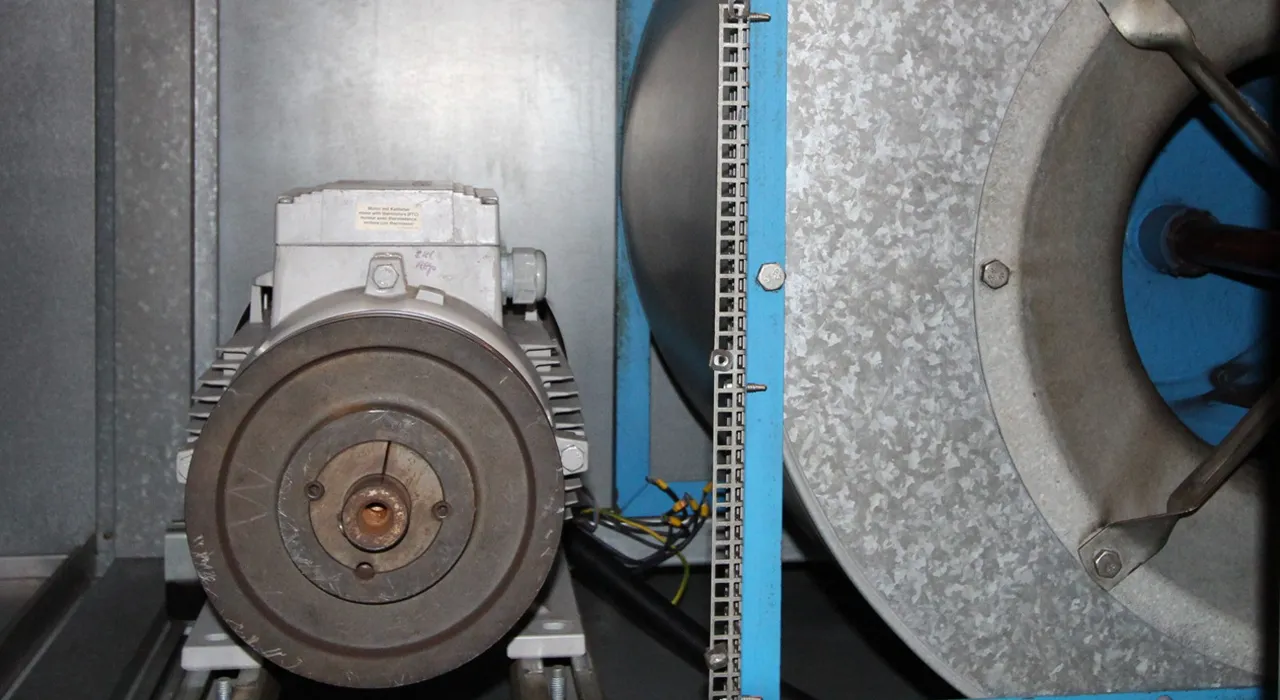
Old technology, high consumption
The ventilation systems in the Rathaus-Center date back to the late 1990s. Many of them were still equipped with V-belt-driven, double-flow fans—a technology that lags significantly behind today’s standards in terms of efficiency and maintenance. In such systems, a V-belt transmits the motor power to the fan wheel via pulleys. Friction losses and material wear reduce efficiency and increase maintenance costs compared to modern, continuously variable EC motors.

“In particular, the exhaust air systems used for cold smoke extraction were using maximum energy,” reports Marco Mittermüller, Head of Service at Daume. “We quickly realized that replacing the old fans offered considerable savings potential.” At the same time, ongoing operations needed to be affected as little as possible. Replacing the existing fans was therefore the ideal solution.

What is crucial for the customer is seeing what modernization really offers in concrete terms. That creates trust in both the technology and the process.
Marco Mittermüller, Head of Service at Daume
Smaller fans, greater impact
Since 2021, Daume’s installation team has modernized a total of nine systems with 61 RadiPac EC fans of the 2nd and 3rd generations. To achieve optimal reliability, Daume relied on FanGrid: Instead of one large fan, several EC fans now operate in parallel—in the Rathaus-Center, usually four to eight per FanGrid, depending on the requirements of the system. This arrangement ensures significantly higher operational reliability. If one fan fails, the others automatically increase their speed so that the air flow remains constant. This overlap is a major advantage, especially during ongoing operations at the Rathaus-Center, where a failure would be immediately noticeable.
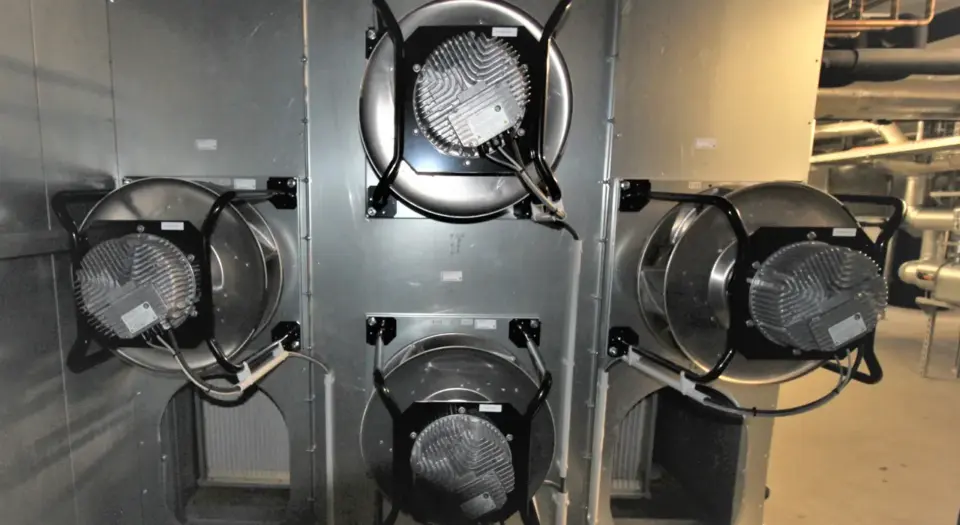
Thanks to FanGrid, RadiPac fans operate close to their optimum efficiency while ensuring reliable system operation. (Image | Daume GmbH)
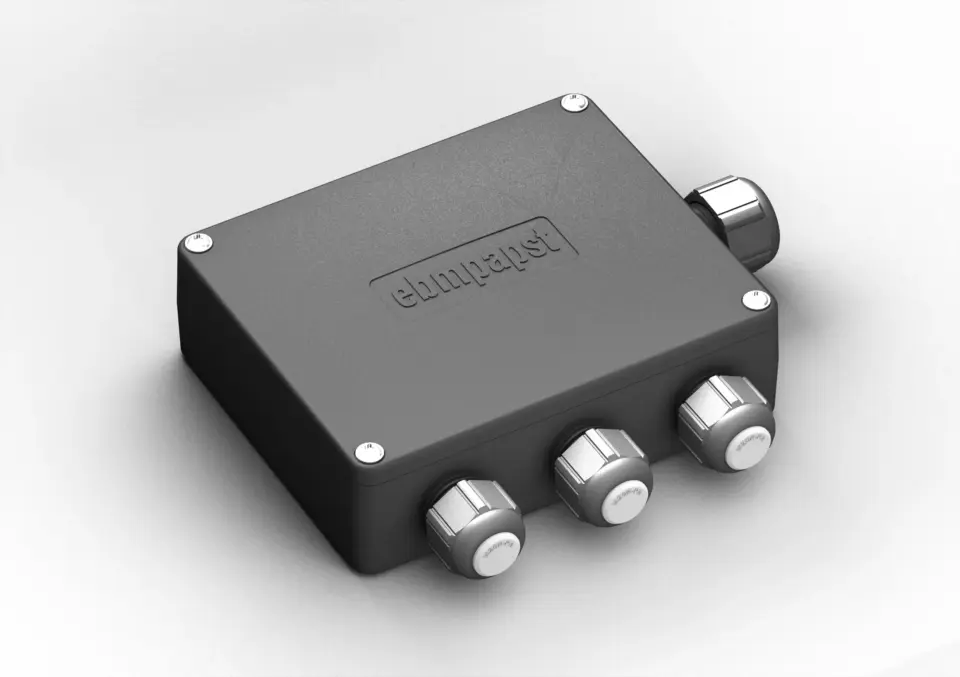
The IntelliGate gateway forms the basis for digital monitoring: it collects operating and sensor data and makes it available centrally. (Image | ebm-papst)
“The RadiPac fans, available in several sizes, were ideally suited to the requirements of the Rathaus-Center in terms of both performance and space,” explains Jens Duchow, Regional Manager Berlin-Brandenburg at ebm-papst. “They enable an energy-efficient solution without costly conversions.”
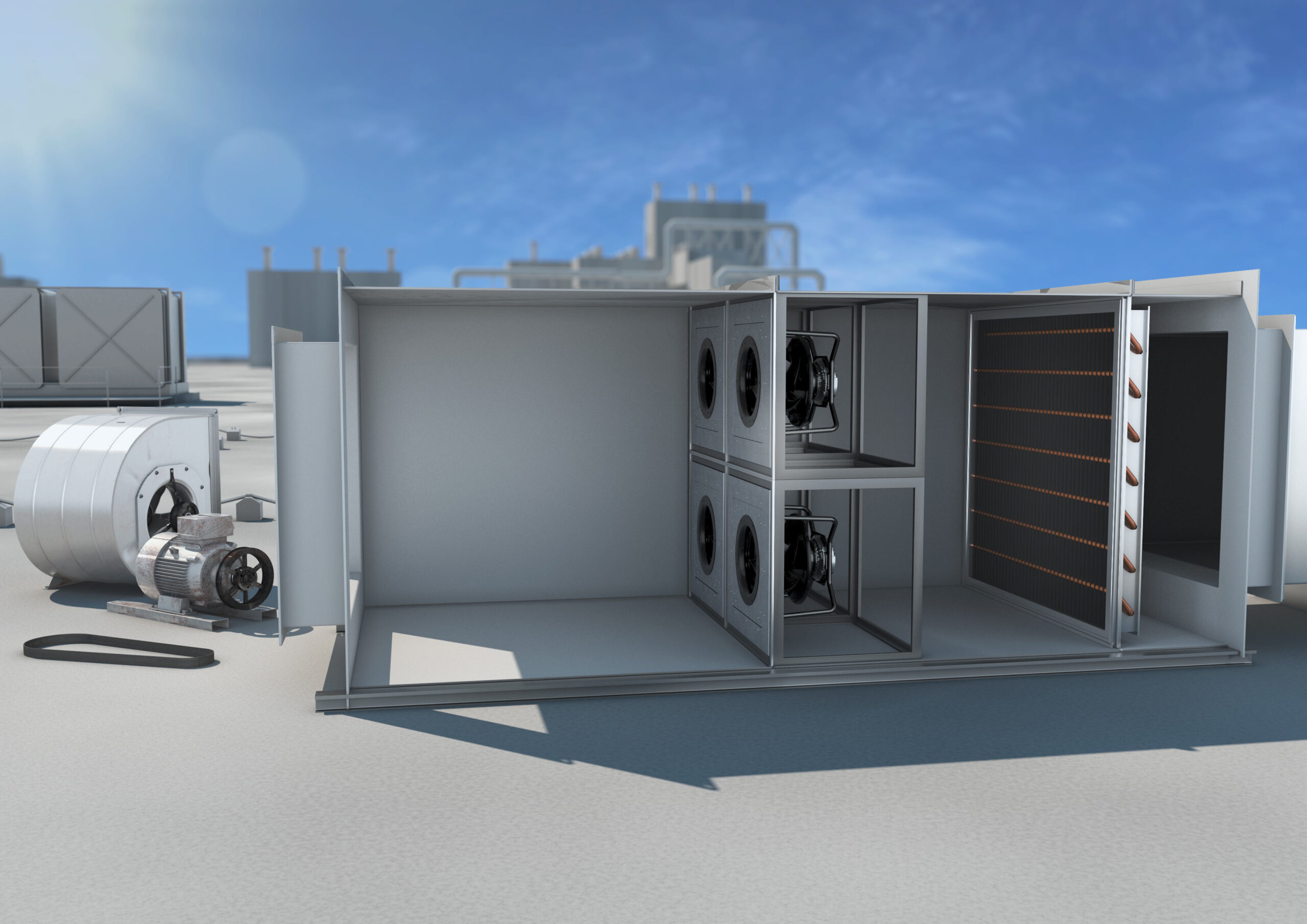
FanGrid for the win
FanGrids are the most efficient solution for high air flow rates.
Visible savings thanks to digital monitoring
After modernization, many operators are faced with the question: How much are we actually saving? And is there further potential to be exploited? The answers lie in data. That’s why Jens Duchow suggested digital monitoring of the systems after the physical retrofit—with NEXAIRA.Fit, the digital solution from ebm-papst specifically designed for smart retrofits with 360° monitoring. The idea was convincing: Mittermüller wanted to transparently demonstrate the savings achieved with the new fan solution.
All nine modernized systems were therefore additionally equipped with a digital infrastructure. The RadiPac fans provide operating data such as power consumption via the standard Modbus interface. The IntelliGate gateway from ebm-papst records this data as a central data interface and processes it further. Daume also integrated air quality sensors for temperature, CO2 and VOC content from S+S Regeltechnik. The gateway also collects this sensor data and then transmits it around the clock in encrypted form to the ebm-papst cloud platform.
What data does the NEXAIRA.Fit dashboard visualize?
- Energy savings in kWh, euros and CO₂
- Operating hours, speeds and temperatures
- Heat maps of energy consumption
- Alarms and system statuses
All recorded values provide the basis for automated, demand-driven system operation. NEXAIRA.Fit displays all important information visually on a clear dashboard that Daume and the Rathaus-Center can access. The software also enables functions such as automatic ESG reporting, real-time monitoring and proactive maintenance notifications. For the operator of the Rathaus-Center, this means real-time transparency, cost control and a clear basis for further investments. “What is crucial for the customer is seeing what modernization really offers in concrete terms,” says Mittermüller. “And that creates trust in both the technology and the process.”
0tons
of CO₂ saved
0kWh
less energy consumption
Approx.0€
in cost savings
0%
total energy savings
By combining RadiPac, Gateway, sensor technology and the ebm-papst cloud, the Rathaus Center not only benefits from lower energy consumption, but also from greater operational reliability and verifiable savings: Since the retrofit in 2021, 130.41 tons of CO2 and around €76,000 in costs have been saved by 2025. That corresponds to an energy saving of 46 percent! The payback period for the systems converted so far is less than three years—a result that has convinced the operator to budget for further modernizations each year.
Leave a comment